Balance and Gait Disorders
Personalized physical therapy to help you feel steadier, walk with confidence, and return to the life you love.
Find Your Footing Again
We have all experienced dizziness at some point, and it is not a pleasant sensation. Feeling as though the ground beneath your feet is giving way can make everyday movement stressful and limiting. This sensation is common for people with balance and gait disorders.
Do you often feel dizzy or unbalanced? Do you look for walls, railings, or other objects to help you stay steady as you move? If your equilibrium feels out of whack, Comprehensive Physical Therapy can help. Our specialty services help patients in Metairie and Mandeville improve their quality of life with an individualized plan for safer, more confident movement.
Balance and gait problems can increase the risk of falls and injury. A thorough physical therapy evaluation can identify the movement, strength, coordination, and vestibular factors contributing to your symptoms.
How Do Balance and Gait Disorders Differ?
These concerns are often confused, but they affect movement in different ways.
Gait Disorders
Gait abnormalities cause irregular movements in your walking or running pattern. They may become more pronounced with age. Strokes, inner-ear issues, foot problems, and even ill-fitting shoes can exacerbate a gait disorder.
Balance Disorders
Balance problems can be physical and mental: your brain may feel as though you are moving when you are not. You may feel as if you are falling or stumbling while walking, and may experience dizziness or blurred vision. Joint strength, mobility, and proprioception all affect balance.
Common Conditions That Can Affect Balance
A number of factors can cause or worsen balance and gait problems. Your vestibular system helps control your sense of position, also known as proprioception.
BPPV
Benign paroxysmal positional vertigo can occur when calcium debris in the inner ear breaks off, causing balance problems.
Neurological Problems
Many neurological conditions can cause balance and gait problems, including Parkinson's disease, brain injury, and stroke.
Injuries and Illnesses
An injury, disease, accident, or other illness that causes muscle weakness can disrupt balance and make it difficult to stay upright.
How Physical Therapy Can Help
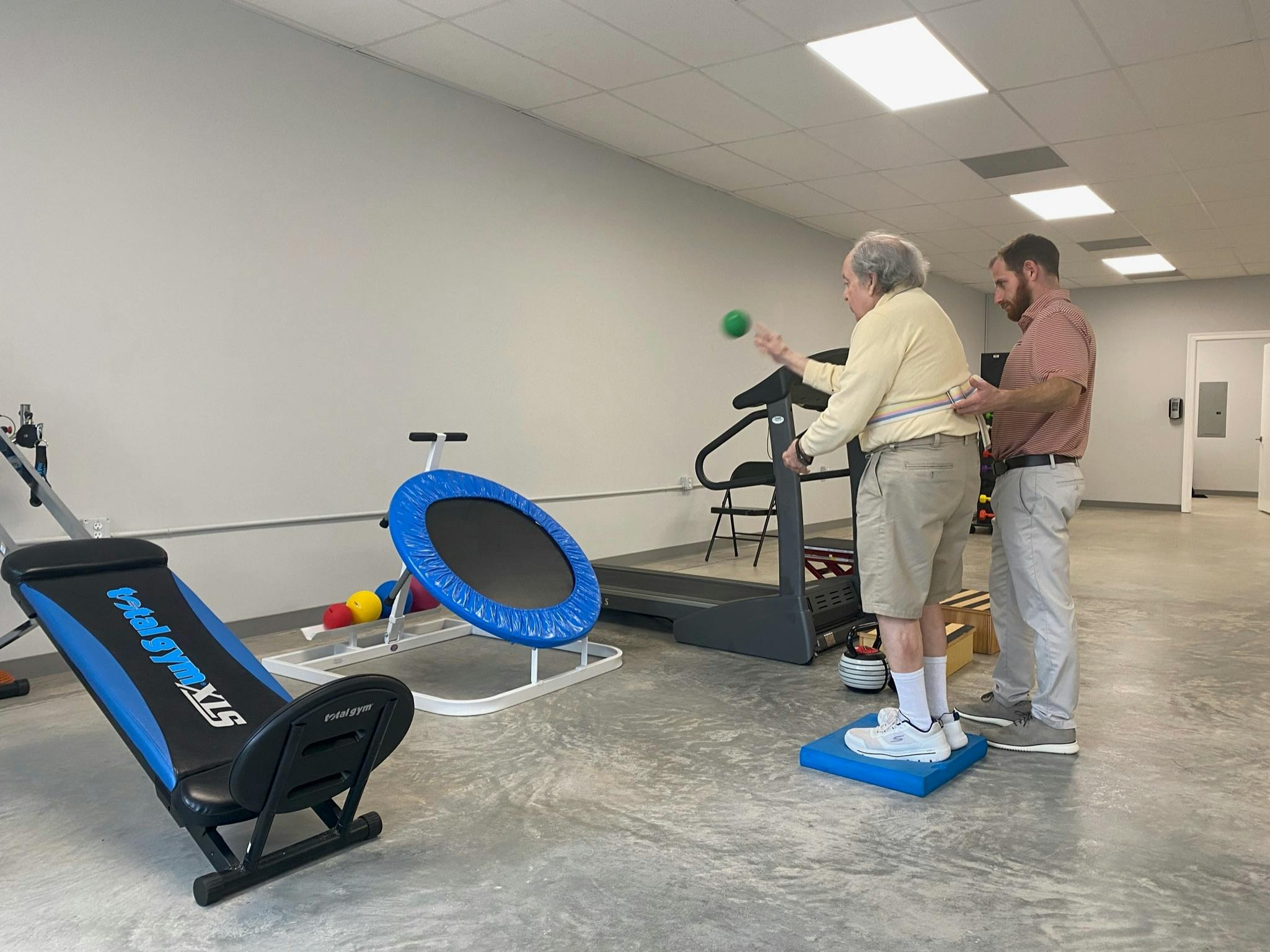
Physical therapy is an effective treatment for balance and gait disorders. At your first visit, your physical therapist will complete a thorough examination of your balance, gait, stance, medical history, and symptoms. Your treatment plan is built around the findings of that evaluation and your specific needs.
Our goal is to help you improve your steadiness, walking skills, mobility, strength, and independence while reducing your risk of falling and getting injured.
Vestibular Rehabilitation
Specific exercises may help move calcium debris to the appropriate parts of the ear. Vestibular therapy works with vision, nerves, muscles, and the vestibular system to help you maintain a steadier balance.
Stretches
Stretching can improve flexibility and range of motion, giving you more control and helping you respond to movement more quickly. It also helps prevent muscles from becoming overly tight and stiff.
Gait Retraining Exercises
Retraining helps you learn proper movement techniques and can sometimes correct gait abnormalities. Runners in particular can benefit from this type of therapy.
Strengthening Exercises
Your evaluation identifies the areas that need support. You will learn muscle-building exercises designed to make moving around easier and reduce your risk of injury.
Ready to Return to the Life You Love?
You do not have to put up with balance and gait problems. Our physical therapists can show you effective methods for improving balance and walking skills. If you are having trouble staying steady, seek help before a fall leads to injury.
Your Next Steps
- Request an appointment
- Receive a custom treatment plan
- Work hard and progress in your recovery
- Recover and enjoy life with less pain